
Water Leaking from the Base of Your Toilet? Here's Why
A puddle where the toilet meets the floor is never 'just condensation' until proven otherwise. Here's how to tell — and why to call (626) 630-0640 fast if it's real.
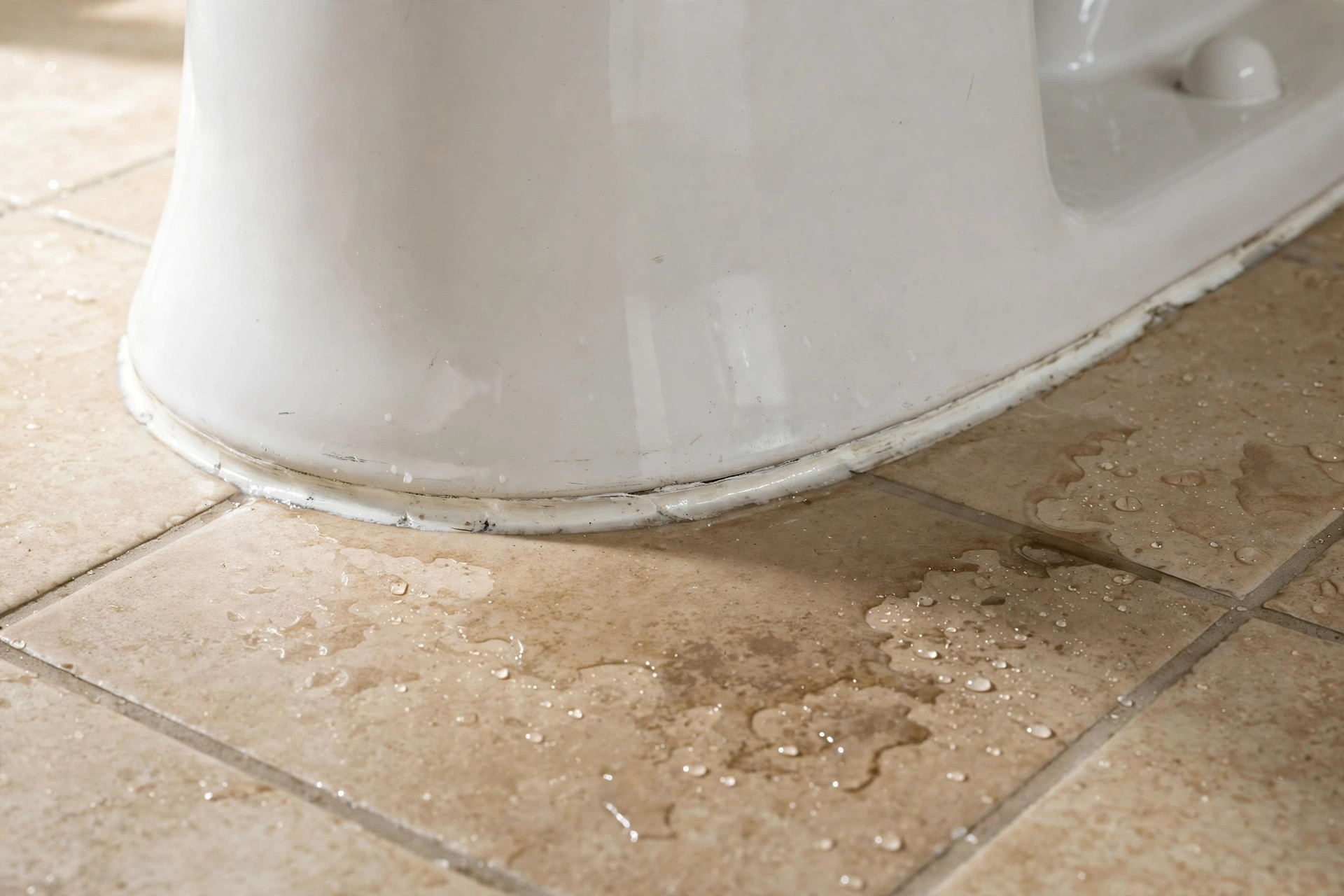
Water at the base of the toilet is the leak you take seriously.
A dripping supply line is annoying. A running tank wastes water. But water pooling where the toilet meets the floor is in a different category — because in most cases, that's not clean water. It's wastewater escaping from under the toilet, soaking into your flooring where you can't see it. The longer it sits, the worse the damage: subfloor rot, mold, and a repair bill that grows every week you wait.
The good news is the cause is usually straightforward, and the fix — while not a DIY favorite — is routine for any toilet repair Arcadia CA professional. Here's what's actually going on down there.
Cause #1: the wax ring failed
Between the bottom of your toilet and the drainpipe flange sits a ring of wax — the wax ring. Its whole job is to seal that connection so wastewater goes down the pipe and nothing else goes anywhere. Wax dries out, compresses, and loses its seal over the years. Once it fails, every flush pushes a little water out from under the base.
Wax rings fail faster when the toilet rocks. Even a slight wobble — from loose closet bolts, an uneven floor, or a toilet that was never shimmed properly — works the seal loose with every use. If your toilet has rocked for years, the wax ring has been dying for years. The puddle is just the announcement.
Cause #2: loose closet bolts
Two bolts (under those little caps at the base) hold the toilet to the flange. They loosen over time. A toilet that shifts when you sit down is a toilet whose wax seal is being ground down daily. Sometimes tightening the bolts — gently, a quarter turn at a time, alternating sides — stops a minor seep. But if water has been escaping for a while, the wax ring is already compromised and tightening alone won't reseal it. And go easy: overtightening cracks the porcelain base, which turns a seal job into a replacement job.
Cause #3: a cracked toilet base or tank
Hairline cracks in the porcelain let water seep out slowly. Check around the base and the back of the bowl for fine cracks, especially if the toilet took a knock (a dropped tool, a kid standing on the seat). Cracks in the tank usually show up as water running down the back of the toilet. A cracked toilet can't be patched reliably — that's a replacement, not a repair. Our guide to repair vs. replace covers how to make that call.
Cause #4: a damaged closet flange
The closet flange is the fitting the toilet bolts to, sitting at floor level over the drainpipe. Flanges crack, corrode, or sit too low relative to a floor that was later retiled — any of which breaks the seal geometry the wax ring depends on. You can't see the flange without pulling the toilet, which is exactly why this diagnosis belongs to a pro. If the flange is damaged, it gets repaired or replaced when the toilet is reset.
Or is it just condensation?
Before you panic, rule out the innocent explanation: in humid weather, cold tank water makes the porcelain sweat, and drips run down to the base. Here's the paper-towel test:
- Dry the base and floor completely with towels.
- Wrap dry paper towels snugly around the base of the toilet.
- Don't use or flush the toilet for a few hours.
- Check: if the towels are wet without any flushing, water is seeping from the seal — that's a real leak. If they're dry until someone showers or the bathroom steams up, it's likely condensation.
Also check the supply line and shut-off valve behind the toilet — a slow drip there runs down and pools at the base, mimicking a seal leak. Dry everything, then watch where the first wetness appears. Location tells the story.
Why a base leak can't wait
- It's wastewater. Water escaping under the toilet has been in the bowl. It's unsanitary, and it's soaking into materials you can't easily clean.
- Subfloors rot quietly. Wood subflooring and underlayment absorb water and weaken. By the time the floor feels soft, the damage is extensive.
- Mold follows moisture. A damp, dark space under and around the toilet base is ideal for mold growth — inside the floor, where you won't see it.
- Small now, big later. A failed wax ring doesn't heal. Every flush adds more water to the problem.
Stop using that toilet until it's fixed. Every flush pushes more wastewater under the base. Use another bathroom if you have one, and call (626) 630-0640 — we'll connect you with a local pro quickly. This is exactly the kind of job where waiting costs more than acting. Learn how Arcadia toilet repair service connects you with a local pro.
What the fix looks like
For a failed wax ring, the repair is called a pull-and-reset, and it's routine:
- The pro shuts off the water, drains the tank and bowl, and disconnects the supply line.
- The toilet is lifted off — this is the moment the flange, bolts, and old wax ring all get inspected.
- The old wax is scraped off, the flange is checked for damage, and a new wax ring (or wax-free seal) is set.
- The toilet goes back on, gets shimmed level if the floor is uneven, and the closet bolts are tightened evenly.
- Everything is reconnected, the toilet is flushed several times, and the base is checked for any seepage.
It's typically a single visit. And while the toilet is up, the pro can see things you'd never catch otherwise — a cracked flange, a corroded bolt, early subfloor damage — and deal with them before they become their own emergencies. If the toilet also runs constantly or the tank hardware is worn, that's the efficient moment to handle it.
Water at the base? Don't wait — call now.
Base leaks damage floors fast. One call connects you with a local Arcadia pro who'll pull, reseal, and reset your toilet properly.
📞 Call (626) 630-0640 Free to call · 414 S 1st Ave, Arcadia, CA 91006Questions, answered
Why is water coming out from under my toilet?
Most often, the wax ring — the seal between the toilet base and the drain flange — has failed, letting flush water escape underneath. Loose closet bolts, a rocking toilet, a cracked base, or a damaged flange cause the same symptom. Dry the area and do the paper-towel test to confirm it's a real leak, then call (626) 630-0640.
Can I just caulk around the base to stop the leak?
No — that's one of the worst things you can do. Caulk traps the leaking water underneath where it rots the subfloor unseen, while the leak continues. The seal has to be fixed at the source: pull the toilet and replace the wax ring.
How do I know if it's condensation or a real leak?
Dry everything, wrap paper towels around the base, and don't flush for a few hours. Wet towels with no flushing means a seal leak. Also check the supply line behind the toilet — a drip there can run down and pool at the base, mimicking a wax ring failure.
Is a leaking toilet base an emergency?
Treat it as urgent. Water under the toilet is usually wastewater, and it damages subflooring and invites mold with every flush. Stop using that toilet and call (626) 630-0640 — we'll connect you with a local professional quickly.
How much does it cost to reseal a toilet in Arcadia?
We don't set prices — the independent professional quotes before starting. A pull-and-reset with a new wax ring is a routine single-visit job; if the flange is damaged or there's subfloor damage, that's additional work the pro will explain upfront. The call is free.